The AI Paradox: Why Thinking is Cheap but Expertise is Scaling
In Scientific Wrestling, we call it "Physical Chess." It’s the art of using timing and specialized knowledge to shut down raw, unthinking force. Right now, the business world is staring down a "raw force" of its own: Generative AI.
Dario Amodei, the guy running Anthropic, basically dropped a bomb recently. He’s predicting AI will handle end-to-end engineering and cognitive work within a year. Most people hear that and think it’s the end of the road. They’re wrong. If you actually understand the "Scientific" approach to branding and business, this isn't a threat. It’s the biggest advantage we've ever seen.
If you want to survive the next 24 months, stop treating AI like a shiny new toy. Here is how the world is actually shifting.
1. Why "Efficient" Doesn't Mean "Less."
The big panic is that AI will render workers obsolete. Honestly, that’s just a massive misunderstanding of how markets work. Look at the Jevons Paradox. Back in the 1860s, steam engines got way more efficient with coal. Logic says we should have burned less coal, right? Wrong. We burned exponentially more because energy became cheap enough to use for everything.
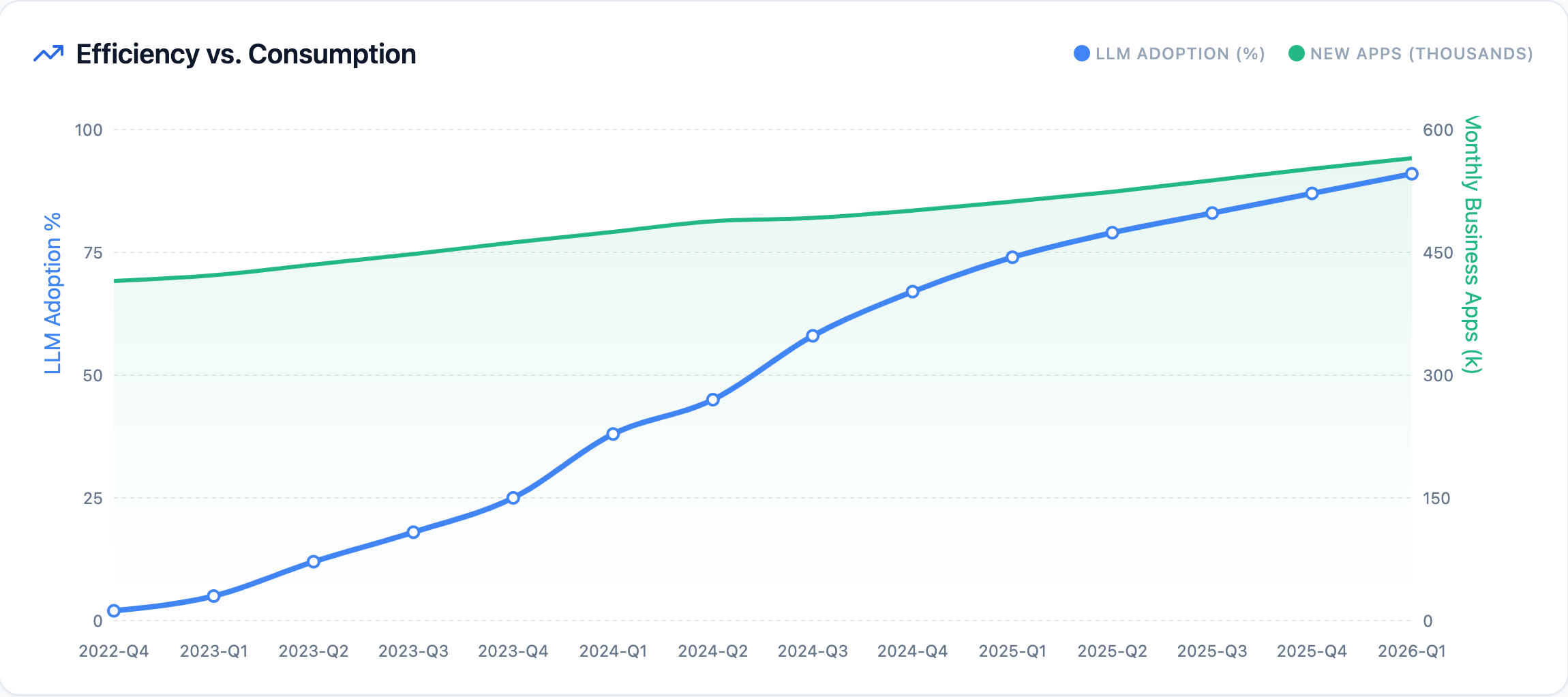
The same thing is happening right now. Just look at the new business applications hitting the U.S. Census Bureau. As AI adoption spikes, so does the rate of new companies. We aren't seeing things shrink—we’re seeing them explode into fragments. When the cost of coding or writing drops to zero, the market doesn't just stop. It demands 100x more software and 100x more niche solutions. Here’s the deal: AI is making the "work" a commodity. That’s fueling a gold rush. If you’re still selling your labor by the hour, you’re done. But if you’re the one directing the agents? You’re the new king.
2. The Scarcity of the Human Element
There’s this economic concept called Baumol’s Cost Disease. It’s why a laptop gets cheaper every year while a live concert or a high-end coach just gets more expensive. You can automate a chip factory, but you can’t automate the four minutes it takes a string quartet to play Mozart.
You can’t automate trust. You definitely can’t automate the grit required in a high-ticket sales close, and you sure as hell can't automate the experience of a Billy Robinson-style neck crank. As the world floods with "digital slop" and AI bots, actual human-to-human expertise is the only thing left that's truly rare. In Sportify OS, we lean into high-ticket sales because that’s where this scarcity works in your favor. AI can write the script. It can’t hold the frame.
3. The "J-Curve" of the Winner
Finally, there’s the Solow Paradox—the idea that you see computers everywhere except in the productivity data. Most companies are stuck in "The Dip" right now. They’re burning money on AI tools, but their actual output is dropping because they haven't redesigned their workflows. They haven't fixed their Physical Chess.
At Scientific Wrestling, we don’t just stack new moves on top of a broken system. We fix the system. The winners in 2026 won't be the guys with the most ChatGPT subscriptions. It’ll be the "Frontier Firms" who used this transition to restructure their entire business around agents. The data is already showing that these guys are growing twice as fast as everyone else.
The Bottom Line
The "Coding Apocalypse" isn't the end—it’s a transition. It's catch-as-catch-can. The old guard is getting pinned because they're too heavy and too slow to change. AI is making thinking a commodity. But systems, brand authority, and deep expertise? Those are the most valuable things on the planet.
We aren't waiting for AI to replace us. We're using it to scale the stuff a machine can never touch. Stop writing code. Start leading agents. Stop selling your hours. Start selling outcomes.
